
the mushroom and the sacred cross pdf
The Sacred Mushroom and the Cross: An Article Plan
John M․ Allegro’s 1970 publication, “The Sacred Mushroom and the Cross,” proposes a controversial re-evaluation of Christian origins, examining ancient fertility cults․
John M․ Allegro’s The Sacred Mushroom and the Cross, published in 1970, ignited a firestorm of debate with its radical proposition: that Christianity’s roots lie not in divine revelation, but in ancient fertility rituals centered around the use of psychoactive mushrooms․ Allegro, a former Dead Sea Scrolls translator, meticulously argued that core Christian symbolism – including the cross, the Eucharist, and even the figure of Jesus Christ – were derived from pre-existing pagan traditions․
His thesis posited that early Christian figures were, in fact, enacting and reinterpreting ancient myths involving a dying-and-rising god, often linked to the consumption of hallucinogenic fungi․ This challenged conventional understandings of faith and spirituality, prompting accusations of blasphemy and scholarly dismissal․ The book’s provocative nature stemmed from its attempt to demystify religious origins, suggesting a more earthly, and potentially scandalous, foundation for one of the world’s major religions․ Allegro’s work remains a touchstone for discussions surrounding altered states of consciousness and the origins of religious belief․
Historical Context: The 1970 Publication
The year 1970 was a period of significant social and cultural upheaval, marked by widespread questioning of authority and established norms․ This climate of rebellion and exploration provided fertile ground for John Allegro’s The Sacred Mushroom and the Cross․ The late 1960s had witnessed the burgeoning psychedelic revolution, fueled by figures like Timothy Leary and a growing interest in altered states of consciousness․
Simultaneously, a renewed focus on comparative mythology, influenced by scholars like Robert Graves, encouraged re-examination of ancient religious practices․ Allegro’s book tapped into these currents, offering a sensationalist yet academically-grounded argument that resonated with a countercultural audience․ The publication coincided with increasing scrutiny of biblical scholarship and a desire to understand the historical context of religious beliefs․ Despite facing immediate controversy, the book quickly gained notoriety, becoming a bestseller and sparking intense debate within both academic and popular circles․
John M․ Allegro: Author Background
John M․ Allegro (1927-1987) was a British scholar specializing in ancient Semitic languages and religions․ He earned a degree in archaeology from the University of Cambridge and became a lecturer in Semitic studies․ Allegro’s academic work focused on the Dead Sea Scrolls, and he spent considerable time studying ancient texts and archaeological sites in the Middle East․
However, he became increasingly disillusioned with traditional interpretations of biblical history and developed a fascination with the potential role of psychoactive substances in ancient religious practices․ This led to his controversial research culminating in The Sacred Mushroom and the Cross․ Allegro’s background provided him with the linguistic and historical tools to analyze ancient texts, but his unconventional theories often placed him at odds with mainstream scholarship, ultimately impacting his academic career․
The Core Argument: Fertility Cults and Christianity

Allegro’s central thesis posits that Christianity evolved from ancient Near Eastern fertility cults centered around the worship of a phallic god, often symbolized by a mushroom․ He argues that key biblical narratives, including the story of Jesus, are reinterpretations of older myths relating to dying-and-rising god figures associated with agricultural cycles and ecstatic rituals․

The “sacred mushroom,” according to Allegro, was a psychoactive fungus used in these rituals to induce altered states of consciousness and facilitate communion with the divine․ He contends that the symbolism of the cross, traditionally associated with Jesus’ crucifixion, has pre-Christian origins as a symbol of fertility and regeneration․ This provocative argument challenges conventional understandings of Christian origins, suggesting a more earthly and pagan foundation․

Exploring the Key Themes
The book delves into Sumerian history, comparative mythology, ancient religious practices involving plants and drugs, and the central role of the fungus․
Sumer and the Beginnings of History
Allegro’s investigation begins with Sumer, positing that the roots of Western religious symbolism lie within this ancient Mesopotamian civilization․ He meticulously examines early Sumerian cosmology and religious practices, seeking parallels with later traditions․ The author suggests that foundational narratives, predating the biblical accounts, centered around fertility deities and rituals involving psychoactive plants – specifically, the sacred mushroom․
This exploration isn’t merely historical; it’s a comparative study aiming to demonstrate a continuity of religious ideas․ Allegro argues that the Sumerian creation myths, the roles of their gods, and their ritualistic practices offer crucial clues to understanding the development of religious thought․ He connects these ancient origins to the emergence of later religious systems, including Christianity, proposing a lineage of beliefs rooted in the fertile crescent and its associated plant-based spiritualities․
The Names of the Gods: Comparative Mythology
Allegro delves into comparative mythology, meticulously analyzing the etymology and symbolism of divine names across various ancient cultures․ He proposes that seemingly disparate deities share common origins, often linked to concepts of fertility, vegetation, and the life-giving properties of plants․ This comparative approach extends to examining the sounds and structures of names, suggesting phonetic connections that reveal underlying shared roots․
The author argues that these linguistic and symbolic similarities aren’t coincidental, but rather evidence of a shared ancestral religious framework․ He focuses on identifying recurring themes and motifs in the myths surrounding these deities, particularly those relating to sacrifice, resurrection, and the consumption of sacred substances․ Allegro’s analysis aims to demonstrate that the names and attributes of gods across cultures are often variations on a central archetype, connected to the power of the natural world and, specifically, the sacred mushroom․
Plants and Drugs in Ancient Religions
Allegro extensively explores the historical use of plants and psychoactive substances in ancient religious practices, asserting their central role in shaping religious experiences and beliefs․ He examines evidence suggesting that various cultures utilized plants to induce altered states of consciousness, believing these states facilitated communication with the divine and access to hidden knowledge․ This investigation encompasses a wide range of botanical substances, with a particular emphasis on those possessing hallucinogenic properties;
The author meticulously details how these plants were incorporated into rituals, myths, and symbolic systems, arguing that they formed the foundation of many ancient religious traditions․ He posits that the consumption of these substances wasn’t merely recreational, but a sacred act intended to transcend ordinary perception and connect with the spiritual realm, ultimately influencing the development of religious narratives and iconography․
The Role of the Fungus: A Central Claim
Allegro’s core argument revolves around the assertion that the Amanita muscaria mushroom—a psychoactive fungus—held a pivotal, yet deliberately obscured, position in the origins of Christianity․ He contends that this mushroom was revered as a sacred symbol of fertility and divine power in ancient Near Eastern cultures, predating and influencing the development of Christian beliefs and rituals․ This claim forms the bedrock of his controversial thesis, challenging conventional interpretations of biblical narratives․
He proposes that the mushroom’s psychoactive properties were central to religious experiences, and its symbolism permeated ancient mythology and iconography․ Allegro suggests that the “fruit of the tree of knowledge” in the Garden of Eden wasn’t an apple, but a reference to this sacred fungus, and that its consumption played a role in the development of early religious consciousness․
Plant Names and the Mysteries of the Fungus
Allegro meticulously examines the etymology of plant names within biblical texts, arguing that many seemingly innocuous references conceal allusions to the Amanita muscaria mushroom and its associated rituals․ He posits that the “herb” mentioned in various passages isn’t a typical botanical plant, but a coded reference to this sacred fungus, deliberately obscured by later translators and religious authorities․
His analysis extends to the symbolic meanings attributed to plants in ancient mythology, suggesting a consistent pattern of associating specific flora with altered states of consciousness and divine encounters․ Allegro believes that understanding these hidden linguistic and symbolic connections is crucial to unlocking the true origins of Christian symbolism and the underlying mysteries of the faith․
The Key of the Kingdom: Deciphering Symbolism
Allegro contends that the “Key of the Kingdom” isn’t a literal key, but a symbolic representation of knowledge – specifically, the understanding of the fungal mysteries and their connection to ancient fertility cults․ He argues that early Christian symbolism, including imagery of gardens, trees, and fruits, are all coded references to the hallucinogenic properties and ritualistic use of the Amanita muscaria mushroom․
He attempts to decipher these symbols by drawing parallels between biblical narratives and ancient Near Eastern mythology, suggesting that the stories of Adam and Eve, the Garden of Eden, and the Tree of Knowledge are all allegorical representations of the mushroom’s role in inducing altered states of consciousness and spiritual revelation․
The Man-child: Allegro’s Interpretation of Jesus
Allegro’s most provocative claim centers on his interpretation of Jesus as a “Man-child” – a divine offspring born from a union facilitated by the sacred mushroom․ He posits that the nativity stories, particularly the virgin birth, are symbolic representations of a ritualistic impregnation achieved through the consumption of psychoactive fungi․
He argues that Jesus’s miracles and teachings were not supernatural events, but rather demonstrations of the altered states of consciousness and heightened perception induced by the mushroom․ Allegro suggests that the figure of Jesus is a composite of various mythological archetypes, all rooted in ancient fertility cults and the worship of the divine mushroom․

Connections to Mythology and Literature
Robert Graves’ work, like “Food for Centaurs,” deeply influenced Allegro, providing a framework for understanding psychoactive plants’ role in ancient mythology․
Robert Graves’ Influence on Allegro
Robert Graves exerted a significant influence on John M․ Allegro’s research, particularly through his meticulous investigations into mythology and the historical significance of plants, notably mushrooms and their potential psychoactive properties․ Graves’ literary work, most prominently “Food for Centaurs,” offered a compelling exploration of ancient rituals and beliefs surrounding sacred flora․
This provided Allegro with a crucial foundation for understanding the potential role of psychoactive substances in shaping religious experiences and mythologies of the Near East․ Graves’ detailed analysis of classical literature and folklore offered a framework for interpreting symbolism and uncovering hidden meanings within ancient texts, directly impacting Allegro’s approach to deciphering the origins of Christianity․ The psychedelic renaissance of the mid-20th century also benefited from Graves’ pioneering work, establishing a literary and historical context for exploring altered states of consciousness and their connection to spirituality․
Food for Centaurs: The Sacredness of Plants
Robert Graves’ “Food for Centaurs” meticulously explores the ancient Greek association between specific plants – particularly mushrooms – and altered states of consciousness, linking them to ritualistic practices and mythological narratives․ The book posits that certain plants were deliberately used to induce ecstatic experiences, facilitating communication with the divine and shaping religious beliefs․
Graves’ research highlights the sacredness attributed to these plants within ancient cultures, suggesting they weren’t merely sustenance but integral components of spiritual ceremonies․ This concept profoundly influenced Allegro, providing a lens through which to examine the potential role of psychoactive flora in the development of early Christian symbolism and rituals․ “Food for Centaurs” established a crucial link between mythology, botany, and altered states, offering a compelling argument for the deliberate use of plants in ancient religious practices․
The Psychedelic Renaissance and its Roots
The mid-20th century witnessed a “psychedelic renaissance,” fueled by renewed interest in the potential of psychoactive substances to unlock altered states of consciousness and explore the depths of the human psyche․ This movement wasn’t born in a vacuum; it drew heavily from earlier scholarship, notably the work of Robert Graves and his exploration of ancient plant-based rituals․
Graves’ “Food for Centaurs” provided a historical and literary framework for understanding the long-held human connection with psychoactive plants, particularly mushrooms․ This framework resonated with researchers investigating the effects of substances like LSD and psilocybin, suggesting a continuity between ancient practices and modern explorations․ Allegro’s work, “The Sacred Mushroom and the Cross,” further contributed to this burgeoning field by proposing a radical reinterpretation of Christian origins through the lens of ancient fertility cults and plant-based spirituality․
Allegro and the Work of Arthur Leskov
John M․ Allegro’s research in “The Sacred Mushroom and the Cross” notably referenced the archaeological investigations conducted by Arthur Leskov in the Crimean area․ Leskov meticulously examined hundreds of ancient graves, uncovering intriguing evidence that Allegro believed supported his theories regarding the worship of phallic deities and the use of psychoactive substances in ancient rituals․
Specifically, Allegro drew upon Leskov’s findings to bolster his argument for the prevalence of fertility cults in the Near East, suggesting these cults profoundly influenced the development of early Christian symbolism․ The Crimean graves, according to Allegro’s interpretation of Leskov’s work, revealed artifacts and burial practices indicative of a widespread reverence for the life-force and its representation through phallic imagery and potentially, the sacred mushroom․

Analyzing the Evidence
Allegro meticulously examined archaeological findings, comparative mythology, and linguistic analysis to support his claims about pre-Christian origins and symbolic interpretations․
Archaeological Findings: Graves and Crimea
Allegro referenced the extensive work of A․ Leskov, who investigated hundreds of graves in the Crimean area․ These archaeological discoveries provided crucial evidence for Allegro’s theories concerning ancient religious practices and symbolism․ Leskov’s findings, detailed in his research, suggested a prevalence of specific imagery and artifacts linked to fertility cults and potentially, psychoactive substances like mushrooms․
The Crimean grave sites revealed patterns that Allegro interpreted as supporting his hypothesis about the worship of a phallic deity and the use of hallucinogenic plants in religious rituals․ He believed these practices predated and influenced the development of early Christian symbolism․ The geographical location of Crimea, a crossroads of ancient civilizations, further strengthened his argument for the diffusion of these beliefs and practices across the Near East․
Allegro’s analysis of Leskov’s work was central to his argument, providing tangible archaeological support for his controversial claims regarding the origins of Christianity․
The Cross as a Symbol: Pre-Christian Origins
Allegro meticulously argued that the cross, far from being uniquely Christian, possessed deep roots in pre-Christian symbolism, particularly within ancient fertility cults․ He posited that the cruciform shape was originally a representation of the male reproductive organ, a symbol of life, power, and regeneration․ This interpretation challenged the conventional understanding of the cross as solely an instrument of execution and a symbol of sacrifice․
He traced the cross’s presence in various ancient cultures, demonstrating its use as a religious emblem long before the advent of Christianity․ Allegro suggested that early Christians adopted and adapted existing symbols, imbuing them with new meaning while retaining their underlying associations with fertility and the divine․ This appropriation, he claimed, obscured the original, more primal significance of the cross․
Allegro’s research aimed to demonstrate the cross’s pagan origins, suggesting a continuity of religious ideas across different cultures and time periods․
The Lynching Tree and the Cross: A Parallel
Allegro provocatively drew a parallel between the crucifixion of Jesus and the horrific practice of lynching, particularly as it occurred in the United States․ He argued that both involved the public display of a body suspended from a tree – a symbolic act of power, humiliation, and control․ This comparison, though controversial, aimed to expose the darker, more brutal aspects of the crucifixion narrative․
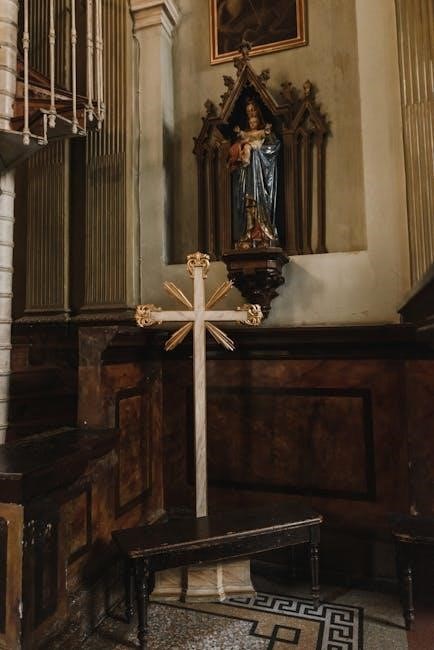
He suggested that the cross, in its original context, may have been less about spiritual redemption and more about asserting dominance and maintaining social order․ The lynching tree, similarly, served as a tool of racial terror and oppression․ Allegro’s intention wasn’t to diminish the suffering of Jesus, but to contextualize it within a broader history of violence and ritualistic execution․
This unsettling connection challenged conventional interpretations of the cross, prompting readers to confront uncomfortable truths about power dynamics and societal brutality․
Evil and the Cross: Exploring Dualities
Allegro’s work delves into the inherent dualities surrounding the cross, questioning its solely benevolent symbolism․ He posited that the cross wasn’t simply a symbol of salvation, but also held associations with darker forces and ancient pagan rituals․ This exploration challenged the traditional Christian narrative, suggesting a more complex and ambiguous history․

He examined how the cross, as a pre-Christian symbol, was often linked to deities associated with both creation and destruction, life and death․ This duality, he argued, was deliberately obscured by the early Church to establish a more unified and controlled theological framework․ Allegro believed understanding these obscured origins was crucial․
By acknowledging the cross’s potential connection to “evil” or opposing forces, Allegro aimed to reveal a more honest and nuanced understanding of its historical and symbolic weight․
The Crucified Life: Allegro’s Perspective
Allegro’s interpretation of Jesus, as presented in “The Sacred Mushroom and the Cross,” diverges significantly from traditional Christian theology․ He proposed that Jesus wasn’t a divine being, but a mortal man deeply connected to ancient fertility cults and the ritualistic use of psychoactive substances – specifically, the sacred mushroom․
Allegro argued that the “crucified life” wasn’t merely about physical suffering, but a symbolic representation of the death and rebirth cycle central to these ancient religions․ The crucifixion, in his view, was a reenactment of a primordial myth involving a dying-and-rising god, fueled by hallucinogenic experiences․
This perspective radically recontextualizes the Passion of Christ, portraying it not as a unique act of salvation, but as a continuation of age-old religious practices․

Further Considerations
Allegro’s work sparks debate regarding conspiracies, power dynamics within early Christianity, and the ritualistic significance of the Passion, challenging conventional interpretations․
Conspiracies and the Cross: Challenging Narratives
Allegro’s provocative thesis inherently invites consideration of conspiracy theories surrounding the origins of Christianity and the deliberate obscuring of historical truths․ His exploration of pre-Christian symbolism, particularly the cross and its association with fertility cults, suggests a potential re-writing of established religious narratives․ The book questions whether core tenets of Christian belief were intentionally constructed or evolved from earlier, pagan traditions․
Furthermore, the focus on the potential role of psychoactive substances, specifically mushrooms, in ancient religious experiences introduces the idea that altered states of consciousness may have influenced the development of religious dogma․ This challenges the notion of purely divine inspiration and opens the door to interpretations centered on human agency and manipulation․ The very act of questioning established narratives, as Allegro does, can be perceived as conspiratorial in itself, prompting further investigation into suppressed histories and alternative perspectives on faith and spirituality․
The Kingdom and the Cross: Power Dynamics
Allegro’s work implicitly examines the power dynamics inherent in the establishment and propagation of religious belief systems․ The concept of a “kingdom,” both earthly and divine, is often intertwined with assertions of authority and control․ By tracing the symbolism of the cross back to pre-Christian fertility cults, Allegro suggests that the adoption of this symbol may have been a strategic move to consolidate power and influence over populations․
The book implies that the narrative surrounding Jesus, and the subsequent rise of Christianity, involved a complex interplay of political, social, and religious forces․ The control over religious narratives, and the interpretation of sacred symbols, becomes a tool for maintaining dominance․ Allegro’s analysis encourages a critical examination of how religious institutions have historically wielded power, and how symbols like the cross have been utilized to legitimize authority and enforce conformity․
The Passion and the Cross: Ritual and Sacrifice
Allegro’s investigation delves into the potential ritualistic underpinnings of the Passion narrative, suggesting parallels with ancient fertility rites and sacrificial practices․ The suffering and death of Jesus, as depicted in the Gospels, can be viewed through the lens of symbolic sacrifice – a common motif in many pre-Christian religions․ The cross, in this context, isn’t merely an instrument of execution, but a potent symbol representing renewal and rebirth, linked to agricultural cycles and the veneration of life-giving forces․
He proposes that the story of Jesus may have evolved from earlier myths involving dying-and-rising gods, whose sacrifices ensured the continuation of life and abundance․ This perspective challenges traditional interpretations of the Passion as a unique historical event, instead framing it as a re-enactment of age-old rituals designed to appease deities and secure favorable outcomes for the community․ The emphasis shifts from divine intervention to human attempts to control natural forces through symbolic acts․
John M․ Allegro’s “The Sacred Mushroom and the Cross” remains a deeply controversial work, sparking intense debate since its 1970 publication․ While widely criticized by theologians and biblical scholars for its unorthodox claims, the book undeniably ignited a re-examination of the historical and cultural context surrounding the origins of Christianity․ Its provocative thesis – linking Christian symbolism to ancient fertility cults and the use of psychoactive substances – continues to resonate with those questioning established religious narratives․
The book’s legacy lies in its challenge to conventional interpretations, prompting further research into comparative mythology and the anthropological roots of religious belief․ Despite lacking widespread academic acceptance, Allegro’s work fueled discussions about the potential influence of pre-Christian traditions on the development of Christian doctrine, ensuring its place as a significant, albeit contentious, contribution to the field․